
Planning a European Rail Trip: How to make it extra special
Ideas to finesse your European rail trip, so that it is easier and more spectacular, plus there are some money saving tips too.
Table of Contents
Share

You've used the suggestions to pull together a good sense how you are going to travel from place to place on your European rail adventure.
Though before you go ahead and book it, if you want your trip to be:
- as easy as you can make it,
- more scenic,
- as comfortable as possible,
considering the nuggets of advice below when making a plan, can be worth every minute of your time that you can give them.
Pacing
If your top criteria will be getting from place to place as quickly as possible, you can skip by these tips.
And yes my rail trips around Europe differ from the norm, because I'm trying to research as many trains and stations as possible - but I never tick everything off on my plan.
Because rail travel can be tiring, plus the rush to the senses can be overwhelming, with some of your mind in planning mode.
Hence slowing down can pay off with multiple benefits.
Having a night train strategy
At face value taking a series of night trains can seem a good option for multiple reasons;
- more time at a destination - the night train can arrive more than six hours before the first daytime train,
- fewer locations in which you'll need to arrange accommodation,
- and now taking a night train only uses one up one day of a rail pass travel day allocation, instead of two.
However, even if you opt for a couchette or sleeping cabin,
taking too many night trains on one itinerary can be exhausting - particularly if you’re not
an early riser, or the type of person who falls asleep when in passenger mode.
A good night's sleep on a night train can be 5 or 6 hours of dream land.
I used to think that the journey times between two destinations on night trains were longer than the day trains, because they crept along, in order to avoid disturbing their passengers.
I was wrong - night trains can be noisy environments and that extra time is often needed because they get split and joined back together with other trains in the middle of the night.
Extend the connection time between trains
You have never been to Basel, Barcelona, Berlin, Bern, Bologna, Budapest, Bruxelles, Cologne, Dresden, Geneva, Innsbruck, Lyon, Marseille, Milan, Munich, Salzburg, Verona, Vienna or Zurich.
They're weren't destinations on your must see list,, but now that you have planned a trip, you can see that the optimum way to go, is to make a connection between trains at the stations in some of these cities.
So instead of fretting whether that time between trains will be long enough, instead see if you can push that onward journey back by three or more hours.
Work out a contingency, to make sure that the train on to where you will be spending the night, won't be the final connection of the day.
Then drop your bags in the left luggage and take time between trains to relax.
You're a tourist, so head for a cafe or restaurant in the heart of a city, by its cathedral, main square, harbor or riverside.
Spend a night or two in quieter places
Stringing together a series of consecutive big city breaks can be exhausting, so spending time in destinations based around relaxation, such as beach and lake resorts can enhance a trip in more ways than one.
Leaving the must do list blank on a couple of days, can also provide the energy to complete the wish-list in your final series of destinations.
Trains travelling between big cities also call at these locations which are ideal for winding down;
- Baden-Baden; on the route used by trains traveling between Cologne / Hamburg / Frankfurt and Swtizerland,
- Bad Gastein; on the route which links Munich and Salzburg with Slovenia and Croatia,
- Beziers, on the route used by trains travelling between Barcelona and Lyon / Marseille / Paris,
- Bamberg; which is on the Berlin to/from Munich route,
- Heidelberg; which is around the mid-point of some of Germany's longest rail journeys,
- Lesce-Bled; which is on the route between southern Austria and Croatia,
- Lindau; trains travelling between Munich and Zurich call here,
- Lugano; which is on the Milan to/from Zurich route,
- Stresa; on the route which links Basel and Geneva with Milano.
Enhancing a trip
So those ideas to slow down and take time out from fast trains and big cities will make a rail trip around Europe more pleasurable, but there are also two nuggets of advice which at face value will complicate a trip.
Because these two ideas outlined below, will require taking more trains than you have to!
Though they're particularly worth considering if you have opted to use a rail pass for your itinerary, because extra trains typically requires the booking of additional tickets.
Switch to slower, but more scenic routes
The trains on these alternative scenic routes operate a minimum of every other other hour; All of these videos were taken on my travels.
Milano ↔ Zurich = take this route: Milano -Tirano - Pontresina ↔ Samedan - Chur Zurich
Koln/Cologne ↔ Zurich = take this route: Koln - Karlsruhe via Koblenz - Singen ↔ Schaffhasuen - Zurich
Milano ↔ Basel = take this route: Milano - Brig ↔ Bern via Kandersteg - Basel
Zurich ↔ Milano = Zurich ↔ Cadenazzo ↔ Milano
Paris ↔ Koln/Cologne = take this route: Paris Est - Luxembourg ↔ Koblenz - Koln
Koln/Cologne ↔ Basel on an ICE train = take this route: Koln - Koblenz - Luxembourg ↔ Strasbourg → Basel
Milano ↔ Roma = take this route: Milano - Genova ↔ La Spezia - Roma
Barcelona ↔ Marseille = take this route: Barcelona - La Tour De Carol ↔ Toulouse - Marseille
Innsbruck ↔ Wien/Vienna = take this route: Innsbruck - Worgl - Shwarzach St Veit ↔ Villach - Wien.
Breaking into a day's travels
Some railway routes are akin to bejeweled necklaces, strung with numerous delightful locations in which to spend a few hours between trains, so they pay back the time out taken to experience them.
- See Haarlem and /or Delft when travelling between Amsterdam and Rotterdam.
- Spend time in Padova and/or Vicenza when taking the train between Verona and Venezia/Venice.
- Stop over in either Ulm or Augsburg when travelling between Stuttgart and Munich.
- Experience Antwerpen or Rotterdam when taking the train between Bruxelles and Amsterdam.
- Spend time in Durham or Newcastle or Berwick-upon-Tweed when travelling between York and Edinburgh.
- Stop over in Luneburg or Celle when travelling between Hamburg and Hannover
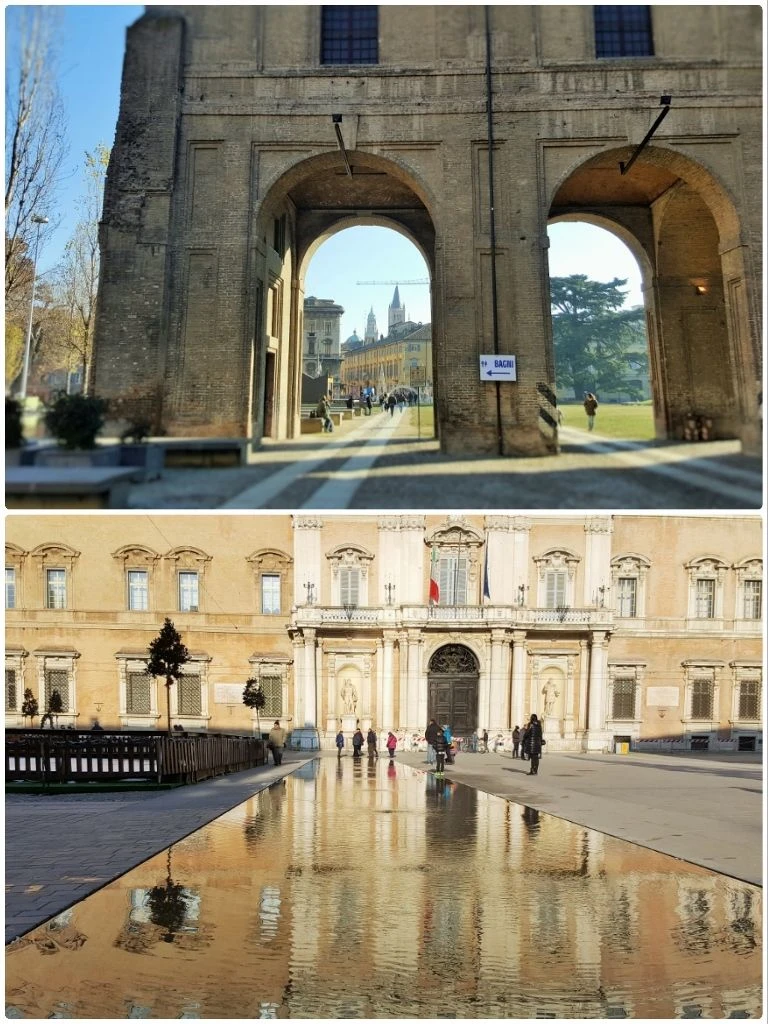
- Stop over in Modena and/or Parma when travelling between Milan and Bologna on the 'classic route'.
Make the going easier
You will have probably worked out by now that I have a passion for rail travel, but I won't shy away from stating that taking the train isn't wholly wonderful; And one of the more awkward aspects is managing one's luggage.
A major difference to flying is the need to heave bags on and off the trains, but it also becomes a burden on route.
When changing trains I like to get out of a station to get a sense of a place, find a cafe that isn't part of a chain etc, but when I have my bag on wheels with me, I don't tend to bother.
Hence when I am on a rail itinerary with 10 or more travel days, I've learnt the hard way to take four items of luggage with me; (1) a medium sized suitcase with wheels, (2) a backpack with straps that fit over the handle of the suitcase, (3) a smaller back pack similar to what I would commute with and (4) a small bag with a strap, big enough to hold a paperback book.
I then arrange the trip to minimise the journeys with the suitcase and maximise the number of days I can travel with the small bags.
So on my most recent, albeit exteme-ish trip to help Sam, I took these steps to decrease my luggage burden:
- London to Paris, deposit suitcase.
- Took the larger backpack, on a two day journey to Madrid.
- A day trip from Madrid with just the smallest bag.
- To Montpellier with the larger backpack.
- Diverting to Paris to pick up the suitcase on route to Switzerland.
- Three day trips from Bern with only the smaller backpack.
- To Verona, with the suitcase - left it and the larger backpack there, before going on to Vicenza.
- Picked up the larger bags on route to Salzburg, where the suitcase was again deposited.
- Travelling on through Germany, Prague and Vienna without the suitcase and circled back to Salzburg.
- Salzburg to Frankfurt and on to Bruxelles with all of the bags.
- A trip to the Netherlands with only the smallest bag, before picking up all of the bags to head back to London.
Hence these two tips, which can be useful - and make a trip that's a lot less manic than mine was, easier to manage.
Looping back to pick up bags
Look twice to see if there any opportunities on your chosen route, to leave some of your bags in a left-luggage facility; and then loop back later on in your itinerary, to collect them, when on route to another destination.
Stations / locations which you'll likely to be travelling through or near more than once include Barcelona, Basel, Cologne, Frankfurt (Main), Milan, Munich, Paris, Salzburg, Vienna and Zurich.
Take epic day trips
Making a day trip by train that involves a two hour (+)
journey each way, probably isn’t something you’d probably usually consider, but they can be worth considering for multiple reasons:
- You’ll arrive in a city centre
- Take a late evening train on your return trip and you’ll have a full day to explore your chosen location.
- You won’t need to have your luggage with you.
Some European locations have railway routes which fan out to multiple must see locations, so make for great bases to spend more than a day or two.
Which both simplifies a trip, while enhancing the potential to take additional scenic journeys and / or to see something wonderful.
The guide below gives access to explanations on how to take multiple day trips by train from Bologna, Cologne, Edinburgh, Ghent, Glasgow, Innsbruck, Leeds, Manchester, Marseille, Milan, Munich, Offernburg Rotterdam and Vicenza.
Also don't miss out on exploiting how the railways of Belgium, Switzerland and The Netherlands are similar to giant metro systems, by setting off on a day or two of exploring by train.
Ideas for day long itineraries that are easier than they seem at face value include:
- Rotterdam > Utrecht > The Hague > Delft > Rotterdam
- Amsterdam > Haarlem > Leiden > Gouda > Amsterdam
- Brussels > Ghent > Antwerp > Brussels
- Ghent > Brugge > Ootsende > coastal tram to De Panne > Ghent
- Zurich > Chur > St Moritz > Klosters > Landquart > Zurich
- Zurich > Arth-Goldau > Rigi-Kulm > Vitznau > boat to Luzern > Zurich
- Geneve > Annemasse > St Gervais > Chamonix > Martigny - Geneve
- Bern > Lausanne > Montreux > Zweisimmen > Bern
- Luzern > Goschenen > Andermatt > Chur > Thalwil > Luzern
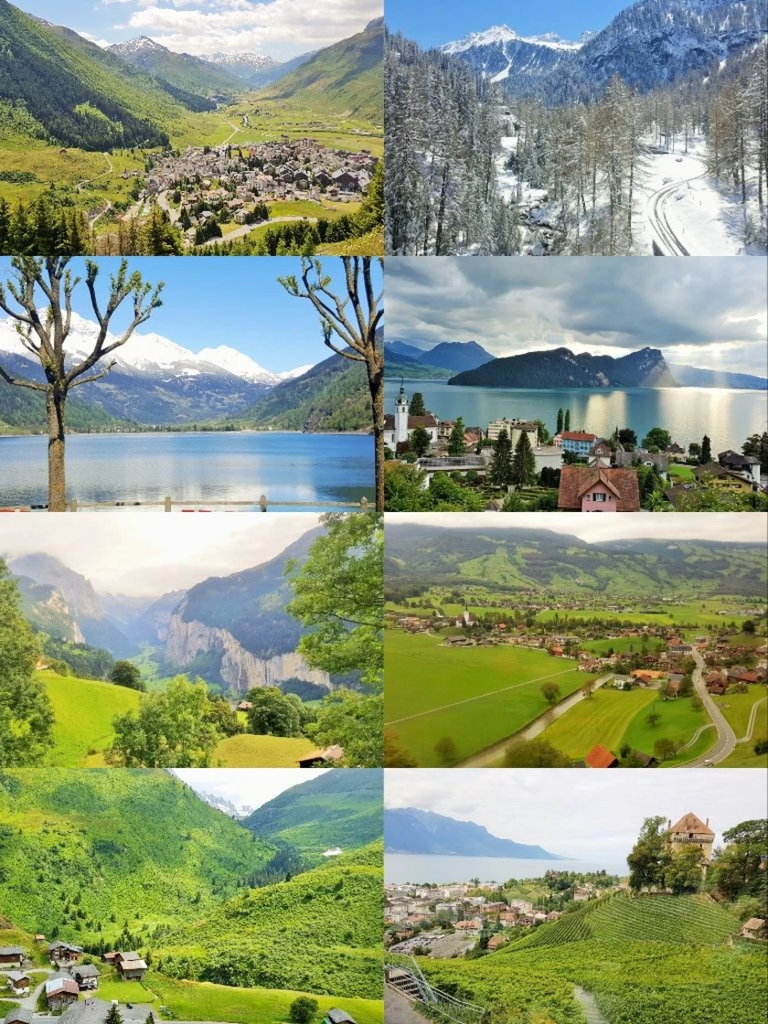
- Basel > Interlaken > Lauterbrunnen > Wengen* > Murren > Interlaken > Luzern > Basel
*= pictured as the main cover image.
Where you go is more important than where you stay
During my trips around Europe I have spent the night in Amersfoort, Malmo, Nyon, Olten and Vicenza, despite these locations not being on my initial agendas.
The reason for doing so was exploiting their easy access by train to the cities in which I had originally panned to stay, in order to save more than 50% on accommodation fees.
I am not an accommodation expert, but when planning a rail trip around Europe, it soon becomes apparent that the average room fees in certain cities are much higher than others.
Hence these ideas for alternative locations can be worth considering:
- for Amsterdam; check rates in Amersfoort, Haarlem, Rotterdam or Utrecht
- for Barcelona; check rates in Girona and Tarragona
- for Basel; take a look at Freiburg, Mulhouse or Olten
- for Copenhagen; consider Malmo or Roskilde
- for Geneva and Lausanne; check rates in Morges and Nyon
- for London; take a look at Reading
- for Venice; take a look at Padua and Vicenza
- for Verona, check out Trento and Vicenza
- for Zurich; take a look at Olten and Winterthur
These alternatives can also be time savers when you will be heading on to your next locations, because the trains can call in them, after they have departed from the cities in which they commence their journeys.
About the Author
Simon Harper has been writing about international rail journeys for over 10 years.