

European Rail Network Gaps Being Closed and those which remain
Coming additions to the 2026 European rail timetable will enable new direct journey opportunities on multiple routes, but other gaps still remain.
Table of Contents
Share

Trust me on this, we are experiencing the Golden Age of European Rail Travel right now.
Billions of €s have been spent in the 21st century to make stations easier to use, trains more accessible and to enable faster and safety journey times.
Yes there are exceptions, but compared to a typical day in the 1930s, there are now thousands of more departures available from stations across Europe.
This is true of Europe's international rail services - Those Trans Europe Express trains of the 1950s to 1990s, may have been undeniably glamourous for the elite who could afford the 1st class only experience, but there are 5 x more international trains heading to/from Paris daily, compared to the pre-high speed railway era.
So on popular routes the international day trains are faster and more frequent, plus the network of European night trains has seen a remarkable renaissance.
However, one thing that was scoured by the coming of the jet-age, were many of the trains which snaked across Europe on epic multi-country routes, which ensured that rail travel was a straightforward option for travel between virtually any city in Europe
Though welcome news is that some of these long abandoned epic routes are to be revived by private rail companies, who have spotted the opportunities.
Already Added
The pan-European rail timetable, which will be in place until December 12th 2026, had some very welcome additions, which will make it easier to plan European rail journeys for leisure.
- Florence / Firenze regained an international daytime rail connection after a gap of more than 20 years, thanks to a new direct EC train to and from Zurich!
- The four countries EC train on the stunning Munich / München - Salzburg - Villach - Ljubljana - Zagreb was cancelled during the pandemic, but now it has returned.
- An entirely new railway route has provided Graz, with direct rail services to and from a swathe of locations including Cologne / Köln, Rome / Roma, Venice / Venezia and Trieste.
- Leipzig now has a direct rail link with Poland, with 2 x trains per day connecting it with Wroclaw, Katowice and Krakow.
Coming later in 2026
Though more transformative will be these impending, exciting additions to the timetable - Some of them are having launch dates extended, as these things are complicated, but they should become a reality soon.
1: Go direct by day between Sweden and Germany
From May 4th, the Swedish train operator Snälltåget is launching a daytime service with a restaurant car on a Hamburg ↔ Stockholm route.
The end to end journey time will be around 11 hours.
Other station calls include Kolding, Odense, København Syd, Malmö, Lund, Linköping and Norrköping, which will also provide new direct links by train between multiple Danish and Swedish locations.
2: Direct trains between Malmo and Oslo
From June 15th Snälltåget is also launching an Oslo ↔ Malmo direct daytime service.
Though to avoid having to make a reversal, this new service won't be calling in Goteborg Central station, but Goteborg has other trains from and to Malmo and Oslo.
Heading north the early afternoon arrival time will enable easily timed onward connections to both Bergen and Trondheim.
In the other direction the arrival in Malmo will enable a connection into the existing Snälltåget night service to Hamburg and Berlin.
3: Go direct by day between Czechia and Denmark
By mid-June, some of the direct day trains which take an already epic Praha - Decin ↔ Dresden - Berlin - Hamburg route are having their journeys extended to and from København / Copenhagen.
After a gap of more than 20 years Denmark will have a direct rail link with a country other Germany and Sweden.
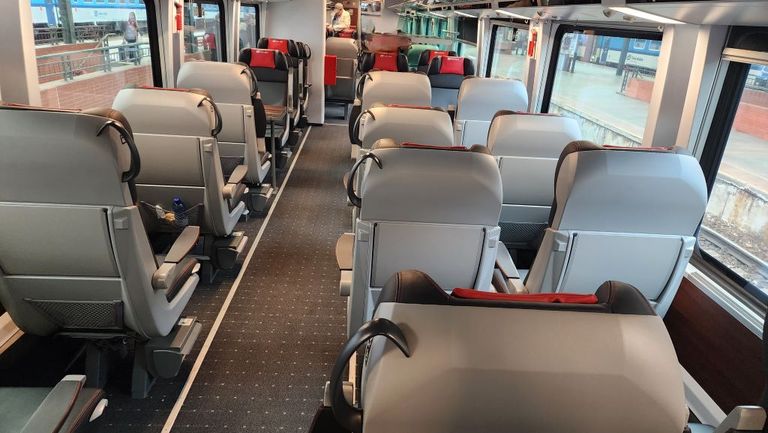
The Czech national rail operator, CD, will be using its brand new and ultra-smart Comfort Jet trains for this transformative service, which will also restore a direct daytime rail link between the Danish and German capitals.
4: Frankfurt (Main) to and from Poland via Czechia
The wonderfully scenic route between Dresden and Prague, by the River Elbe, is to gain another new epic rail route.
For decades a frustrating aspect of the European rail timetable has been the need to connect in Dresden when making a journey between Frankfurt (Main) and Praha / Prague.
The lack of a direct link has seemed illogical, Hamburg has 4 or 5 daily trains from and to Praha, but the main hub of the German rail network had none?
LeoExpress is to close the gap from June 25th when it launches a Frankfurt (Main) - Dresden ↔ Decin - Prague -Ostrava - Krakow - Przemyśl service (not all station calls have been included in this summary).
Heading east the train will typically depart from Frankfurt (Main) Hbf at 08:27 and arrive in Przemyśl after 02:00am.
In the other direction the train will run overnight on the section of the route between Prague and Frankfurt (Main) with an arrival before 08:00.
Though the length of the route has inevitably led to compromises;
- On Tues and Weds, the train from Frankfurt (Main) won't serve the destinations in Poland.
- On Weds and Thurs the journey will commence in Bohumin on the Czech polish border.
Note that the Frankfurt (Main) ↔ Praha / Prague link will be available daily.
5: Direct trains between Amsterdam and Hamburg
For decades one of the most frustrating gaps between European two cities has been the lack of a direct rail service between Amsterdam and Hamburg.
Particularly as the connection between trains at Osnabruck is reliant on an elevator to provide an alternative to multiple flights of stairs.
Now from March 20th new Dutch based rail operator GoVolta will be plugging the gap on three days per week; Daily departures are planned for the summer.
6: Go direct between Belgium and Italy
Before Eurostar trains whizzed through the Channel Tunnel, a journey 'by train' from London to Italy involved taking a ferry to Oostende in Belgium, in order to connect into a train on to Milan, that travelled via Bruxelles, Cologne and Switzerland.
Thrillingly European Sleeper train is to bring back this long lost rail link from September, albeit with a service that will commence and finish in Bruxelles.
Heading south the train will depart on Monday, Thursday and Saturday, with departures from Milano Centrale on Wednesday, Friday and Sunday.
The train will also provide a new direct rail link between Köln / Cologne and Italy, plus it will connect Belgium with Switzerland thanks to the station calls in Bern and Brig.
Then from December a link between Amsterdam and Milan will be available, as the train formation will be split and joined in Köln / Cologne.
7: Go direct between Bruges, Ghent and Germany
That route to/from Oostende mentioned above passes through Bruges and Ghent, so when those 'boat trains' disappeared, these two beautiful Belgian cities lost their rail connection with Germany.
Now rather thrillingly it is coming back, but only in summer.
At weekends from June 3 to July 20 and again from August 6 to 31 , an ICE train on the Frankfurt (Main) - Köln / Cologne - Aachen - Bruxelles route will have its journey extended to and from Oostende with stops in Ghent and Bruges.
Then in September another new Belgium ↔ Germany connection will be available, thanks to the launch of a twice daily Antwerp ↔ Köln / Cologne service by ICE trains.
8: Faster than ever before to Beograd / Belgrade
During the past decade the railway between Beograd / Belgrade and Subotica has been transformed, so that it mirrors other recent fast recent links such as those between Vienna and Linz; and Zurich and Bern.
It will form the Serbian end of an enhanced route that will restore direct rail links between Budapest and Beograd / Belgrade - with some trains continuing beyond Budapest to and from Vienna/ Wien.
These trains connecting the capitals of Austria, Hungary and Serbia were taken off the timetables while the construction work was occurring, but by June 2026 they will return.
Links That Still Won't Be Available
When planning a European rail adventure assumptions have to be made when looking at the Rail Map.
There's no way of knowing which services actually travel along the lines, so one can't follow what looks like a logical route and then expect that a direct train will be avilable.
Hence this list of the missing links should help save time and frustration when working out how to get from A to B by train.
Zagreb - Beograd / Belgrade ↔ Sofia - Thessaloniki - Athens
The chain of different train services that enabled travelers to make a two day + two night journey between Zagreb and Athens were withdrawn during the pandemic and have yet to be restored.
Which is a shame as a trip around the Adriatic through The Balkans was a popular Eurail / InterRail itinerary.
Munich / München ↔ Milano
These two key hubs of the rail of the European rail network were once linked by a Trans European Express, but it disappeared back in 1984.
Today the daytime journey requires a connection in either Verona or Zurich.
Which wouldn't seem odd except for the fact that multiple cities in northern Italy, including Bologna, Venice, Padua and Vicenza, do have direct daytime rail links with Munich, but Italy's second largest centre of population doesn't.
The French Riviera ↔ The Italian Riviera
Another Trans European Express train used to connect Marseille with Milano and the revival of the service was welcomed at the close of 2019.
Its operator Thello had been operating a twice daily Nice - Monte Carlo ↔ San Remo - Albenga - Genoa - Milan service for many years, so it rolled the dice and opted to extend the service beyond to Nice from / to Marseille.
However, it proved to be a blink and you'll miss it venture, because within three months Thello had to withdraw its trains due to the pandemic and the company shut down as result.
As a consequence, the return of a Marseille ↔ Milan train is near the top of the wish-list; Plus a dream come true would be a Nice ↔ Genoa - La Spezia- Pisa - Florence service.
Because the locations which would be connected are eternally wonderful, the journey around the Mediterranean coast is beautiful and there is room for improvement!
Particularly because at the connection station in Ventimiglia / Ventimille, changing trains is often not step-free.
Paris ↔ Venice / Venezia
The other service operated by Thello, which inevitably disappeared when the company shut down, was the overnight train between the French capital and Italy's most beautiful city.
The chances of a revival of an overnight link in the years to come seem slim, particularly as the much heralded recent return of a Paris ↔ Vienna night train lasted only two years!
Though looking to the future, the opening of both Europe's longest rail tunnel and the completion of the Milan <> Venice high speed line, could eventually enable daytime Frecce trains to travel between Paris and Venice in under 8 hours!
Madrid ↔ Lisbon / Lisboa
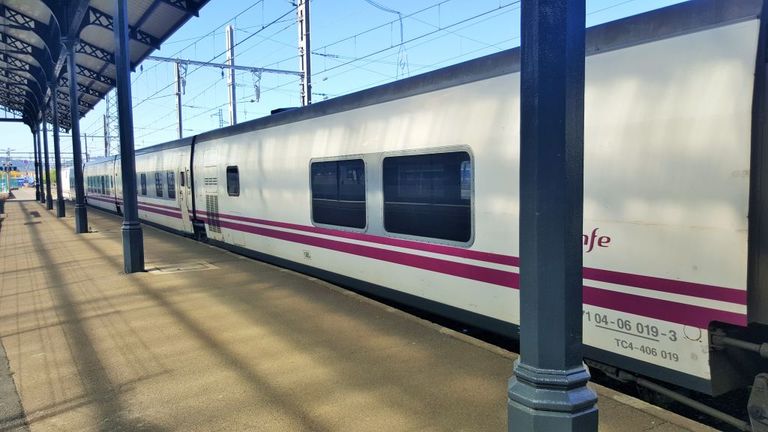
The only other key European rail link that disappeared during the pandemic which won't be revived was the night train between the Spanish and Portuguese capitals.
The journey by day trains requires two connections, but the high-speed line between Madrid and Badajoz, the closest city to the border, edges ever closer to completion.
Once it fully opens and IF some improvements are also made on the Portuguese section of the route, Spanish Alvia trains could perhaps be linking the cities in a journey time of around 6 hours.
Brussels - Lille ↔ Basel - Zurich
Back in the mid 1990s on the first of more than a dozen Interrail adventures, I took a direct EC train from Brussels to Basel that travelled through Luxembourg and Strasbourg.
I was taken aback by what I assumed would be a prestigious train only having three coaches, but I was very grateful that my London to Switzerland journey, hadn't required the need to cross Paris from one station to another.
When the high speed LGV Est line fully opened, the continuous replacement for those EC trains was a TGV service on a Brussels - Lille ↔ Strasbourg route.
But despite other TGV Lyria serices whizzing down the LGV Est to Strasbourg and then carrying on to and from Basel and Zurich, the TGVs from / to Brussels have never repeated this feat.
Then when the LGV Rhin-Rhône opened those TGV Lyria services got switched to a route through Dijon; And for one year only there was a Lille - Dijon ↔ Basel - Zurich service.
An experiment that briefly enabled a dodge of the cross-Paris connection. Though one can only speculate that if the dots had been joined to create a Brussels - Lille - Dijon ↔ Basel - Zurich service, it may have been more successful.
Despite the diversion, I and many other people, would prefer to connect in Brussels (or Lille) when taking London ↔ Switzerland journeys by train.
Venice / Venezia ↔ Ljubljana
This route is in the Top 5 of the journeys I'm most frequently asked about, as the map makes it look easy - not too far and there's a continuous black line marked across the Italy / Slovenia border.
Back in the early 2000s when Slovenia Railways took a leap forward with the launch of its Pendolino services, it began to use them on a direct link between Venice and Ljubljana, but it evidently proved to be a short-lived experiment.
A likely factor being that a highly useful station call in Trieste on a Venice ↔ Ljubljana route, would require both a reversal and a lengthy diversion.
Travelling between Venice and Ljubljana was made easier a few years ago with the launch of a Trieste ↔ Ljubljana - Maribor - Graz - Vienna daily train, which enabled the journey to be made with the one connection in Trieste.
However, the Trieste ↔ Vienna service has been switched to a smart Railjet train that now travels through Villach instead of Ljubljana.
Though another recent change is the launch of trains every two hours between Villach and Ljubljana - and there were already direct trains between Venice and Villach.
So the optimum Venice ↔ Ljubljana journey now requires a connection in Villach, but there are no plans for the direct trains to resume.
Switzerland ↔ Rome
The trains on both the Zurich ↔ Milan and Milan ↔ Rome routes have never been more frequent, but direct trains between Switzerland and the Italian capital will likely be elusive for some time.
Night trains would be dependent on a private operator to launch a new route.
SBB, the Swiss national rail operator, doesn't own any night trains and Trenitalia's have always been confined to national routes.
The new EC day trains on the Zurich ↔ Milan route are superb in many ways, but they evidently can't use the Italian high speed lines.
So an extension beyond to Milan to Rome by any of these EC trains would take around 6hr 15mins - but making the connection in Milano Centrale between the EC trains and high-speed Frecce trans adds less than 4 hours to the Zurich ↔ Milan journey time.
Hence it's a route where for most people, the benefits of going direct are cancelled out by how much longer the journey would be
However, if Trenitalia were to extend a few of its Frecce services beyond Milan to and from Zurich, the end-to-end journey between Italy's capital and Switzerland's largest city, would come down to around 7 hours.
After all Trenitalia is planning to launch a direct Frecce service between Rome and Munich in December 2026 - thereby restoring a daytime service between the two cities after a gap of more than 20 years!
About the Author
Simon Harper has been writing about international rail journeys for over 10 years.