

Beginner's Guide to Reservations when using Eurail and InterRail
Insights on making and avoiding reservations when using Eurail and InterRail passes from someone who has used a pass to make 351 journeys in the past 10 years
Table of Contents
Share

I have travelled more than 60.000km with an InterRail pass, so I have often had to decide whether to make a reservation, not bother, or avoid trains with mandatory reservations
Hence this guide to unpicking the rail pass reservation knot, which hasn't been written by Chat GPT.
Three goals:
1: If you've scratched the surface of researching whether Eurail/InterRail will be right for you, it's likely that have stumbled into the web of confusion around seat reservations.
So a goal is to cut through it, so that you can make that trip happen!
2: If you have dived in and booked a pass so are now planning a trip, or will be at this stage at a future date, you'll be using the Eurail/InterRail trip planning app.
You'll see that journeys you look up are flagged as 'Seat Reservation Required' or, 'Seat Reservation Recommended' or, 'Seat Reservation Available', or they're not marked with any reservation info at all.
So read on to find why this is - And how you can best act on this info, to suit your trip.
3: Conductor Sam will aim to answer your questions about Eurail/InterRail in a matter of minutes, so if you read on, you'll hopefully get an idea of what you need to ask.

Background: Why Seat Reservations aren't x and y...
The core reason why seat reservations can feel like a ball of confusion when using Eurail/InterRail passes is that they originate from the ticket policies of the train companies, so rail pass users aren't the priority.
The companies decide whether to:
- include a seat reservation as a complimentary benefit of booking a ticket, or
- make seat reservations available at additional cost on top of a ticket price, or
- not to make seat reservations available at all.
Every train operator sets it's own policy, often on a train service per train service basis.
Plus what can add to the complex picture is that the operators with different 'rules' tend to collaborate on providing international trains, hence inconsistency.
A handy example are the EuroCity trains between Switzerland and Italy.
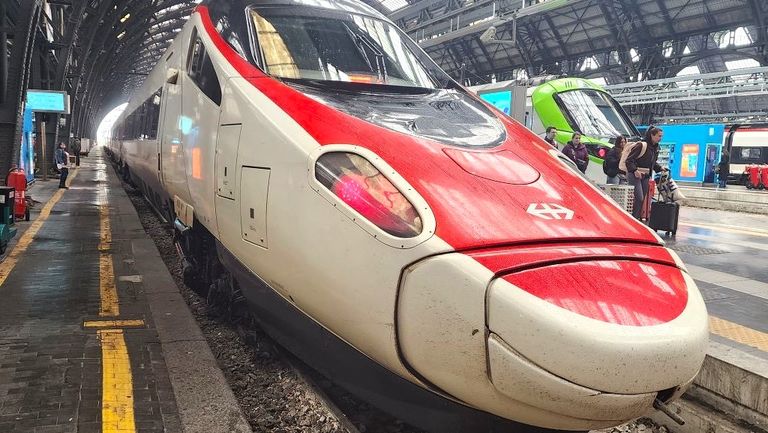
The Swiss national rail operator SBB has a policy that seat reservations are optional on its express trains, but the Italian national operator, Trenitalia, has decided that they will be mandatory in Italy
So when taking these EuroCity trains, if you will be travelling between two Swiss stations with Eurail/InterRail, you don't have to make a reservation, but if you cross the border or travel between two Italian stations, you do.
Eurail/InterRail has a quandary.
It doesn't decide seat reservations policies, prices and quotas, but it wants to paint a picture of the freedom to explore Europe with a pass.
It wants to make it easy, but there are 100s of train services and 1000s of routes on which trains can't, can, or have to be reserved.
So it's come up with a fantastic trip selection and mobile pass app, that flags up the differences, but it doesn't explain the inconsistency.
...And why they're mostly an additional cost
Seat reservations have become something of a 'hot topic' when considering whether using a Eurail/Interrail pass will make it easier and cheaper to take a European rail itinerary.
The value for money debate stems from reservations in most countries, but not Great Britain (yay!) having an additional cost on top of buying a standard version of a pass; the new Plus Pass includes reservations.
Costs that are sometimes best avoided, but are also often worth paying.
Note the lack of 'golden rule or definitive answer, it depends on Where you are going, When and How you want to get there.
A general 'rule' is that the faster and more popular a train journey will be, the more expensive the ticket price - and this equation also applies to rail pass reservations; Follow the crowd to save time and you won't save as much money.
Paying to have a guaranteed seat on a train travelling at more than 280 km/ h on a railway which cost €billions to build is either value for money, or a waste, depending on your point of view.
Though if you're in the second camp, you can plan an itinerary which avoids the expensive high speed journeys and still have trip of a lifetime.
Info for North Americans
A brief pause for the benefit of North American readers - in Europe reservations are a different thing to the meaning in the USA and Canada, which understandably causes confusion.
In Europe a seat reservation guarantees a specific place on the train, it's sold as an addition to a ticket, or is included as a benefit of making a booking, so it isn't a ticket.
So when reading 'how to use reservations when you have a rail pass' it doesn't mean that once you have a rail pass, that you also need to buy a ticket, the pass takes the place of the ticket.
But how you then ride the train depends on its seat reservation policy (the international routes which can or need to be reserved are on these guides).
Types of reservation policy
So the sentence above seems a tad odd right? How can a train have a reservation policy?
Well another ball of confusion stems from the train operators keeping things simple for them, by applying a reservation policy to a type of train rather than the route(s) it takes.
But this reservation per type of train policy can cause meltdowns - after all unless you have a general interest in rail travel you probably won't know which routes will be taken by AVE, ICE, RJX, TGV etc etc trains; And what is a Frecciarossa 1000 or a Snabbtag?
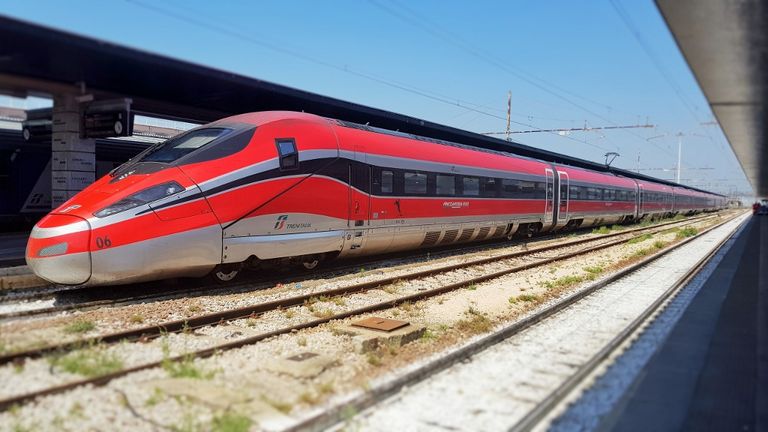
So to make things hopefully easier for everyone in this Beginner's Class this article is flipping that on its head to focus on the journeys and routes - Because specific types of train are used on each route.
Then when you are ready, you can look at the lists of the types of trains to check the cost of each reservation.

What you'll see on those lists is that the type of train doesn't just impact the overall reservation policy, as each of them also have specific reservation fees for rail pass users.
Though try not to fixate on the fact that a few of them cost way more than the norm - it can simply be better value money to book a ticket for some journeys instead.
Differences to taking a flight
Those more used to flying will probably now be wondering whether rail pass reservations should be a topic on a semester at Harvard, but a key difference with taking a plane is that specific seats aren't always assigned when boarding a European train.
When a train service doesn't have specific seat reservations, those who have purchased tickets are free to ride any train of the day on a route - this is also point of difference with travelling in Coach class on trains in the USA.
So some trains on each day will be busier than others and on the most popular departures the seats can all be taken when boarding.
Hence a concern that taking a journey by these trains may be the opposite of relaxing, but it doesn't automatically follow that Eurail/InterRail users should avoid these trains.
Seats will be available on the overwhelming of departures, particularly if you don't board the trains that people will be taking to and from work.
No Reservations
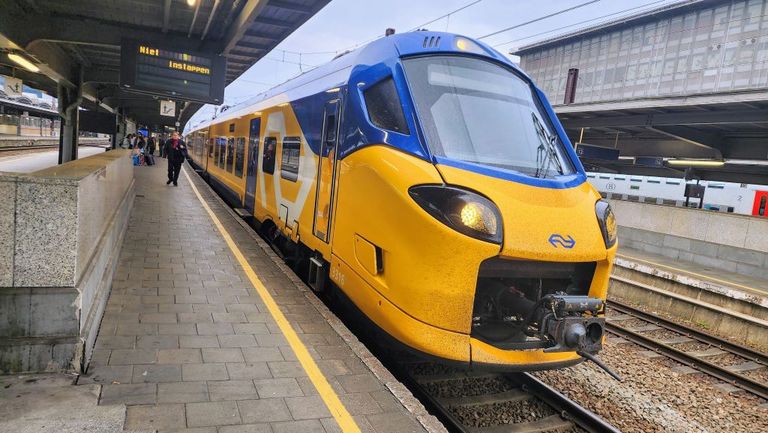
For those who want to prioritize saving money over saving time, the big plus of these trains is that no reservations = no additional cost when using a rail pass.
These are the trains on the Eurail/InterRail trip planners that aren't labelled with any seat reservation info; it's not an error or missing, it's because the info isn't relevant.
Most of these trains are shorter distance Regional services - though some of those trains can cross regional boundaries on longer cross-country routes.
So taking a chain of connecting journeys by these trains, is the most common trick to avoid paying the mandatory rail pass reservation fees, to ride an express train.
Though there can also be a straightforward choice between taking a train that can't be reserved and one that has to be - with the mandatory train taking a faster route.
Countries with no seat reservations on national trains: Belgium, Bosnia-Herzegovina, Luxembourg and The Netherlands
Cross border routes with no seat reservations: Denmark ↔ Sweden (except Snabbtag trains) and Belgium ↔ Netherlands (except Eurostar) and Luxembourg ↔ Belgium, France and Germany
Popular Routes:
Hence popular Eurail and InterRail routes on which direct trains with no reservations available, are either the norm, or at least an option, include:
*= trains with mandatory reservations are more frequent
| Amsterdam ↔ Antwerpen | Paris ↔ Lyon* |
| Brussels ↔ Rotterdam | Avignon ↔ Port Bou |
| Lyon ↔ Avignon | Barcelona ↔ Port Bou |
| Port Bou ↔ Nimes | Nimes ↔ Marseille |
| Marseille ↔ Lyon* | Lyon ↔ Geneve |
| Geneve ↔ Luzern | Luzern ↔ Locarno |
| Locarno ↔ Milano | Milano ↔ Verona |
| Verona ↔ Venezia | Venezia ↔ Bologna |
| Milano ↔ Genova | Genova ↔ Ventimiglia |
| Ventimiglia ↔ Nice | Nice ↔ Marseille |
| Copenhagen ↔ Gothenburg | Gothenburg ↔ Oslo |
Note that some of these trains cross borders!
Other international routes, when these trains are an alternative to paying a mandatory fee on an express train, include: Bern ↔ Domodossola; Innsbruck ↔ Brennero, Villach ↔ Udine and Strasbourg
↔ Offenburg.
Optional Reservations
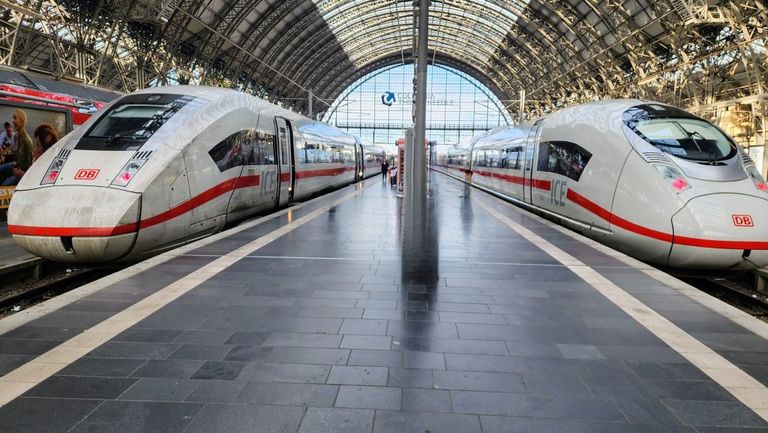
These are the departures on the Eurail/InterRail trip planners that are marked as either 'Seat Reservations Recommended' or 'Seat Reservations Available'.
When travelling on these trains, those who have opted to buy tickets can choose whether or or not to include a seat reservation when booking.
Hence those using a Eurail/InterRail passes can make the same choice when making a journey.
Don't reserve= Save the cost and choose seats when boarding on the scenic side, or by a luggage rack, or with a nice view from the window etc.
OR
Reserve = Peace of mind that you'll have a comfortable trip and you'll have a specific seat(s) to head for when boarding.
So you can therefore avoid having to work out whether a specific seat is or isn't available, with a queue of people behind you wondering when you'll get out of their way?
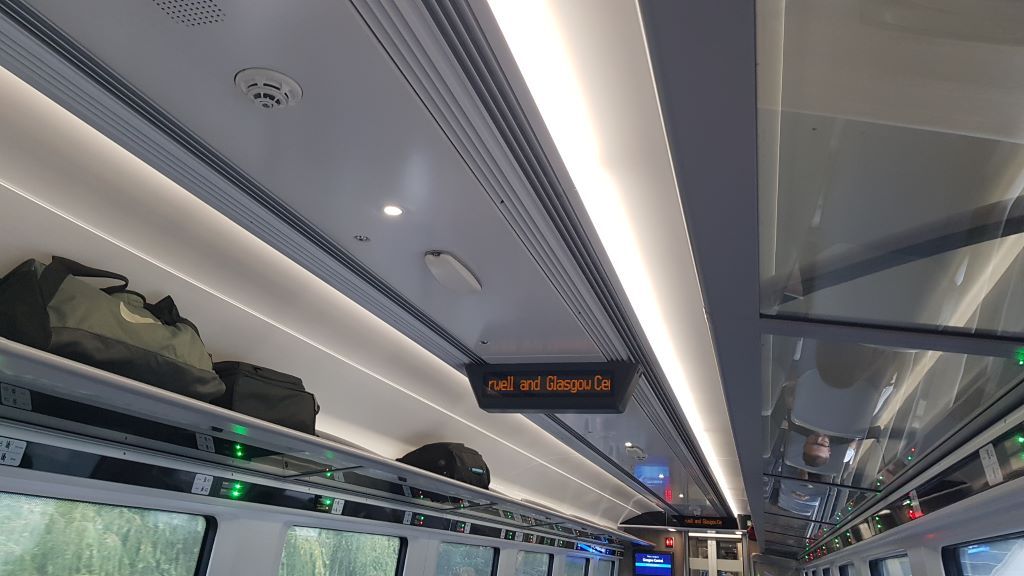
Though what's becoming super useful are the increasing number of traffic-light systems that are being installed on the trains; green = seat available for the entire journey; orange/yellow = seat available for part of the journey; red = this seat has been taken for the entire trip.
Countries with optional seat reservations on national express trains:
Austria, Britain, Croatia, Czechia except SuperCity trains, Denmark, Germany, Ireland, Lithuania, Norway (most routes), Slovakia except SuperCity trains, Slovenia and Switzerland
Cross border express train routes with optional reservations:
Year round:
- Switzerland ↔ Austria
- Switzerland ↔ Germany
- Czechia ↔ Austria
- Czechia ↔ Hungary
- Austria ↔ Hungary
- Austria ↔ Slovenia
- Croatia ↔ Slovenia
September to May
Germany ↔ Austria, Belgium by ICE train, Czechia, Denmark and The Netherlands
Popular Routes with Optional Reservations:
Popular rail pass routes by direct train which have optional reservations include:
| London ↔ Edinburgh | Edinburgh ↔ Manchester |
| Cologne ↔ Basel | Basel ↔ Berlin |
| Prague ↔ Vienna | Vienna ↔ Salzburg |
| Munich ↔ Zurich | Zurich ↔ Geneve |
| Budapest ↔ Prague | Budapest ↔ Vienna |
| Vienna ↔ Ljubljana | Villach ↔ Zagreb |
Though a twist in the tail is that the German rail operator, Deutsche Bahn (DB), recently changed its rail pass reservation policy.
Because Eurail/InterRail pass users can now only opt to reserve when taking its express trains between Germany and most* neighboring countries during September to May.
During June to August reservations are now mandatory on DB's trains between Germany and Austria, Belgium, Czechia, Denmark and The Netherlands (they were already mandatory on express trains between Germany and both France and Poland throughout the year).
So outside of June to August, reservations are still optional when travelling direct on routes such as:
- Berlin ↔ Amsterdam
- Frankfurt ↔ Brussels
- Hamburg ↔ Copenhagen
- Nuremberg ↔ Vienna
*= Switzerland is an exception, rail pass users can opt to reserve on express trains between Germany and Switzerland year round.
To book them or not:
The Eurail/InterRail trip planners will flag many of these routes as 'Seat Reservations Recommended', but what seems to be the case, is that the app isn't going granular and honing in on specific departures that should be reserved.
Instead it tends to be a blanket recommendation on some routes.
For example, the RJX service on the Innsbruck ↔ Vienna route uses Railjet trains on which reservations are optional.
However, the apps tend to flag reservations as being recommended on every departure per day on this route - after all it's a wonderful 4hr 30min ride across Austria.
But the train that leaves around 11:00am on a Tuesday, won't be as busy as the train which departs at 17:00 on a Friday etc.
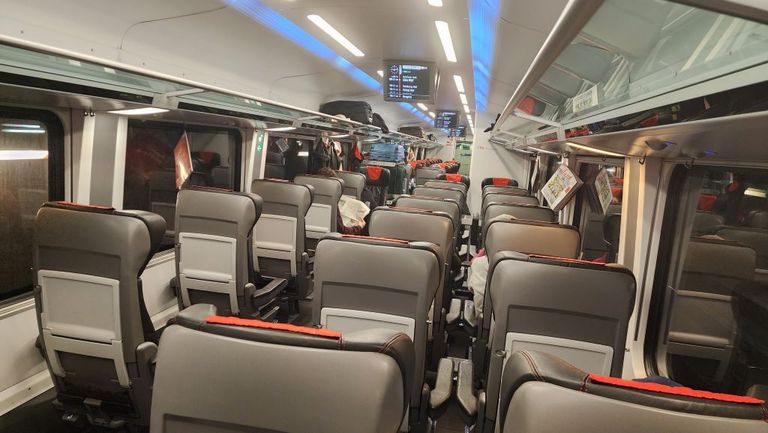
Generally if you will be using a 2nd class pass, having the peace of mind of an assigned seat can be the way to go in these circumstances:
- Journeys on Friday afternoons, Sunday evenings year round and summer Saturday mornings
- Travelling either side of national holidays, particularly around Easter and Christmas
- Taking routes which only have few direct trains per day
- When joining a train at intermediate station calls; because it's easier to see which seats are available when joining a train at its starting point.
Note the reference to 2nd class passes above.
I always travel with 1st class InterRail passes, not because I live like a Lord, but because I can't research a 1st class travel experience with a 2nd class pass.
I never choose to make a reservation when it's optional, partially because I also strive to choose seats on the scenic side of the trains.
Maybe I've been extraordinarily fortunate, but when travelling with a 1st class pass, I have only ever boarded two trains that had optional reservations without immediately finding a seat - And on both of those occasions a place became available at the next station call.
Though I have also taken multiple journeys when 1st class has had multiple seats available, but 2nd class was so crowded that some passengers were having to stand!
Tips for travelling without an optional reservation:
If you don't want to reserve, taking these steps can make for easier travel:
- If you will be joining a train at the station where it will be commencing its journey, aim to be there 30 minutes pre-departure, so that you can be among the first to board.
- At intermediate stations, if there's zone info on the departure indicators make use of it, even though you don't have an assigned seat in a specific coach - you don't want to be waiting where the 1st class coaches will be, if you have a 2nd class pass etc.
- Take your time in checking the info for each seat. There will be typically be some indication showing between which stations a seat has been reserved
- If a seat is only available for the first part of your journey then claim it, other seats may become available at subsequent stations.
- Stow your luggage in space near the door, so that you can search without having to drag your bags through the seating area - after you have claimed a seat(s) you can retrace your steps and move your bag(s) if need be.
- If you can't find a spare seat, an option is to stow your luggage, ask a fellow passenger to keep an eye on it and take a look in other coaches of the train. Not all passengers with reservations will have boarded, so if five minutes into the journey, a 'reserved' seat is unoccupied, it can be yours.
Mandatory / Required Reservations
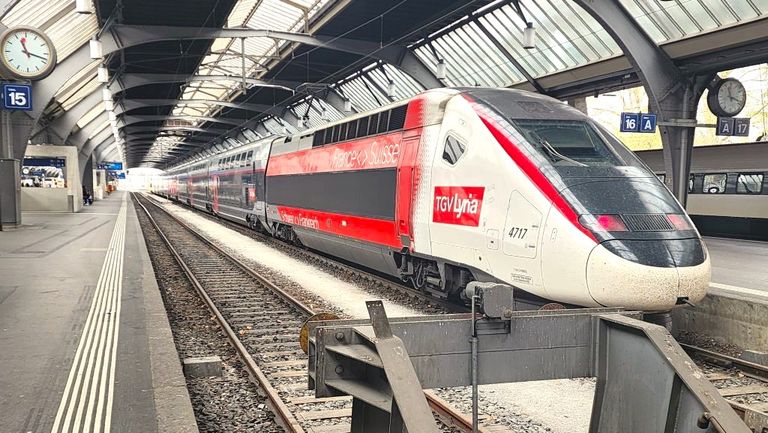
When travelling on most high-speed trains and virtually all night trains, ticket bookers receive a complimentary reservation.
Other countries that don't have high speed lines, can operate top tier express trains that are a step up from the norm.
So the operators of these trains can also include complimentary assigned seats for ticket bookers.
It makes travellers feel a tad special, provides peace of mind and assists with justifying the ticket prices.
Because the seat / room numbers are included with the booking, these trains don't have info by the seats showing between which stations they have been reserved.
The train operators can't therefore risk rail pass users taking up space randomly, hence reservations being mandatory for rail pass users.
The price of these isn't set by Eurail/InterRail.
The train operators are prioritizing the ticket bookers, who in most instances have paid up to more than twice the price per journey, than the rail pass users.
The reservation fees also reflect demand - yes the charges for using Eurail and InterRail on Eurostar trains from and to London are expensive at face value, but these trains can sell out completely weeks in advance.
Why Booking in Advance is recommended
Services with mandatory reservations have a limited number of places available to both ticket purchasers and rail pass users, so the Eurostar services to and from London aren't the only routes with departures which can sell out days or weeks ahead.
Don't overly worry about this, all is explained on the reservation booking guide, you'll find below - but if you will want to take trains with mandatory reservations on a Eurail/InterRail itinerary, booking at least a month ahead is recommended.
Also on most routes, these mandatory reservations cost €10 or less, so despite the additional cost on top of the pass, instead of being 'a con' or a 'rip-off' these mandatory reservations can actually be good value for money.
On my most recent InterRail travels the cost of using a 1st class per day + the mandatory reservation fee was on average, 20% less than the cost of a ticket - even though I had planned the trip two months in advance when ticket prices were cheaper.
Though when planning a Eurail/InterRail itinerary, it soon becomes evident that in France, Italy and Spain, where most long-distance journeys are on super-fast high-speed lines, that rail pass reservations are mandatory on all long-distance express trains, no matter their maximum speed.
Countries with mandatory seat reservations on national express trains: Bulgaria, Finland, France, Greece (but no charge) Hungary, Italy, Poland, Portugal, Romania, Serbia, Spain, Sweden and Turkey (no charge)
Cross border express train routes with mandatory reservations:
Year round:
- Italy ↔ Austria, France and Switzerland
- France ↔ Belgium, Germany, Luxembourg, Italy, Spain and Switzerland
- Great Britain ↔ Belgium and France
- Poland ↔ Czechia and Germany
- Bulgaria ↔ Romania
- Hungary ↔ Croatia and Slovenia
- Estonia ↔ Latvia
June to August
Germany ↔ Austria, Belgium, Czechia, Denmark and The Netherlands
Popular Routes:
Hence popular routes by direct daytime train, which have mandatory reservations for Eurail/InterRail users, include:
(1) Paris ↔ Amsterdam, Barcelona, Basel, Berlin, Bordeaux, Cologne, Frankfurt, Geneva, London, Marseille, Milan, Nice, Nimes, Strasbourg, Toulouse, Turin and Zurich
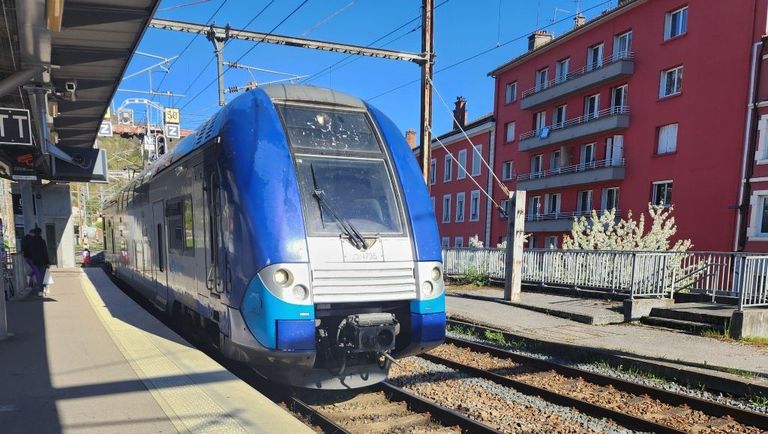
(2) Milan ↔ Bari, Basel, Bern, Florence, Geneve, Lecce, Naples, Pisa, Rome, Venice and Zurich
(3) Rome ↔ Bari, Bologna, Bern, Florence, Genoa, Lecce, Turin, Taormina, Verona and Venice
(4) Barcelona ↔ Alicante, Lyon, Madrid, Marseille, Nimes, Paris, Seville and Valencia
(5) Madrid ↔ Alicante, Barcelona, Bilbao, Marseille, Nimes, San Sebastian, Seville and Valencia
(6) Stockholm ↔ Oslo
Though if you won't mind spending up to a day taking journeys which avoid these trains and their higher reservation fees - here are some alternative route suggestions.
Night trains
In summary on most European night trains, including the Nightjets, which dominate the network, there are three elements to the ticketing:
1 = the journey / distance, +
2 = the cost of reserving a seat, +
3 = the additional cost of reserving any type of flat bed - in a couchette, sleeping cabin, or pod.
In common with the daytime trains, an InterRail / Eurail pass only includes the journey costs.
Since the pandemic, night trains have become increasingly popular leading to changes in reservation charges.
They used to be a fixed rate with the journey price being the element of the total cost that rose or fell, but now it's become the norm for this demand-led pricing to also apply to the reservation fees.
Hence if you'll want sole occupancy of a sleeping cabin on a popular route in the summer, the reservation can be more than 3x times the cost per day of using a pass - despite one day of pass use also covering the overnight transition into the next day.
So the sleeping accommodation has become a more expensive option for rail pass users, despite which the trains can still sell out weeks in advance.
Though the comparative luxury of a bed for the night isn't the only option - hence the separate info on using Eurail and Interrail on European night trains.
All images by Simon Harper
About the Author
Simon Harper has been writing about international rail journeys for over 10 years.