

Destination Guides from main Stations in Germany
Find out the tourist locations that can most easily reached by train from Berlin, Cologne, Frankfurt, Hamburg, Munich and Stuttgart
Table of Contents
Share

Discover where you can travel on to by direct express train from the major rail hubs in Germany that have both national and international trains.
You can see at a glance which other destinations you can access most easily, whether you'll be on holiday in these cities, or stopping over on a rail pass itinerary.
This is a guide intended for leisure travellers, so the non-comprehensive destination lists focus on locations and routes popular with tourists.
The day train frequency guides are based on the usual schedules between 08:00am and 17:00pm, but the availability of the trains can be impacted by temporary timetable alterations.
The frequencies are included as indicators, as in some hours during the day the most regular patterns of departures won’t apply
The rail service in Germany is typically arranged around regular intervals with the core routes taken by the high speed ICE trains operating either hourly or every other hour.
From Berlin
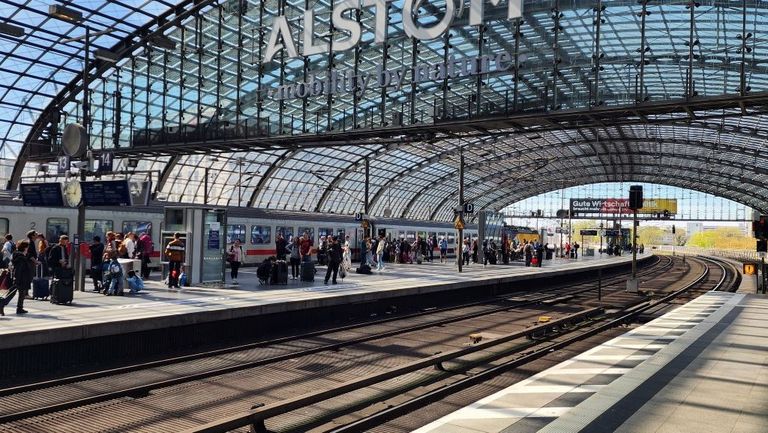
The German capital's main station Berlin Hbf is a symbol of unification, as in effect it is a cross where the east-west route, which in theory could connect Amsterdam with Moscow, meets the north-south route that links Hamburg to Leipzig, Dresden and on into Czechia and Hungary.
1 to 3 x trains per hour
to Hamburg (1 x train per hour until Apr 1st)
2 x trains per hour
München / Munich and Nürnberg / Nuremburg
1 or 2 x trains per hour
to Frankfurt (Main) and Hannover,
0 to 2 x trains per hour
to Stralsund
1 x train per hour
to Dresden, Dusseldorf, Hildesheim, Köln / Cologne and Leipzig
1 x train every other hour
to Amsterdam, Augsburg, Bad Schandau, Bamberg, Basel, Decin, Freiburg(Breisgau), Poznan, Praha / Prague, Stuttgart and Warsaw
Less frequent trains
to Aachen, Copenhagen (from May 1st 2026) Krakow, Wroclaw and Zurich
2 x trains per day
to Bern, Chur, Spiez and Thun
1 x train per day
to Bratislava, Brig, Budapest, Innsbruck, Interlaken, Paris, Strasbourg, Visp and Wien/Vienna
Night trains
to Amsterdam*, Basel, Brussels*, Budapest, Linz, Stockholm, Wien/Vienna and Zurich
*= not every night
For full details see the journey guides.
From Frankfurt (Main)
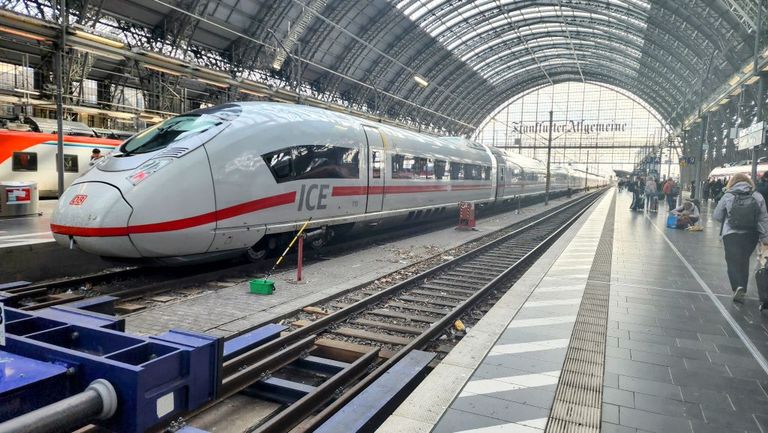
Due to its location towards the center of Germany, Frankfurt (Main) Hbf is the main hub of the German rail network.
It has 24 platforms / tracks (gleis) because so many trains depart and arrive in every hour, hence it is a great base for making day trips to many of Germany's most beautiful locations.
Though because most long-distance trains call in Frankfurt (Main) during their journeys, all of the sleeper trains which serve the city typically depart in the early hours.
1 or 2 x trains per hour
to Berlin, Köln hbf (the city center station in Cologne), Dusseldorf, Hamburg, Hannover, Heidelberg, München / Munich and Nürnberg / Nuremburg
0 to 2 x trains per hour
to Koblenz and Stralsund
1 x train per hour
to Basel, Freiburg(Breisgau), Leipzig, Marburg and Stuttgart
1 x train every other hour
to Aachen, Amsterdam, Baden-Baden, Brussels, Dresden, Linz (not from Feb 7th 2026 until Dec 12th 2026), Ulm, Utrecht and Wien / Vienna (not from Feb 7th 2026 until Dec 12th 2026)
Less frequent trains
to Bremen, Graz, Klagenfurt, Linz (from Feb 7th 2026 until Dec 12th 2026), Paris, Salzburg, Strasbourg, Wien/Vienna (from Feb 7th 2026 until Dec 12th 2026) and Zurich
2 x trains per day
to Bern, Chur, Spiez and Thun
1 x train per day
to Avignon, Bellinzona, Brig, Como, Interlaken, Lugano, Lyon, Marseille and Milan
Night trains (departing before midnight)
to Berlin and Hamburg by ICE trains
For full details see the journey guides
From Hamburg
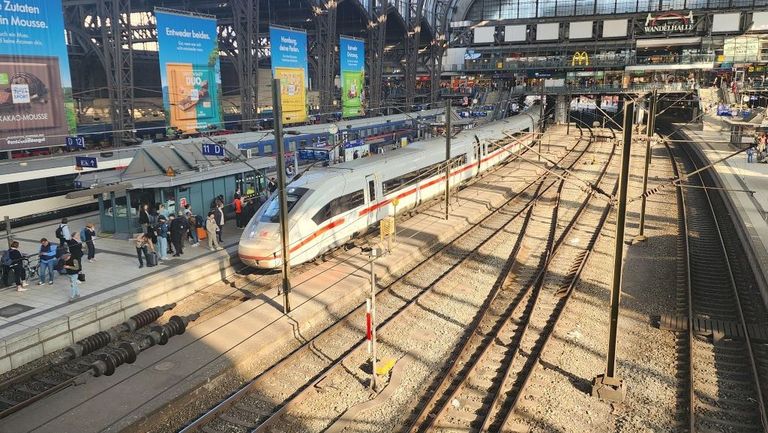
The city's main station Hamburg Hbf is the gateway when taking a train between Germany and Scandinavia.
Though despite its location in northern Germany multiple day and night trains depart and arrive daily on epic routes. which take them as far away as Slovakia and Hungary
1 to 3 x trains per hour
to Berlin (1 x train per hour until Apr 1st)
2 x trains per hour
to Bremen and Hannover
1 or 2 x trains per hour
to Frankfurt (Main), Kiel, Köln/Cologne hbf, München / Munich*, Nürnberg / Nuremburg*, Stuttgart and Westerland (Sylt)**
*= on the fastest route via Kassel
**= most trains depart from Hamburg-Altona
1 x train per hour
to Rostock
1 x train every other hour
to Bad Schandau (from May 1st 2026), Baden-Baden, Basel*, Dresden (from May 1st 2026), Freiburg(Breisgau)*, Karlsruhe*, København / Copenhagen, Leipzig, Marburg, Odense, Praha / Prague (from May 1st 2026), Stralsund and Ulm
*= fastest route via Kaseel
Less frequent trains
to Bamberg and Heidelberg
1 x train per day
to Bern, Bratislava, Brig, Budapest (from May 1st 2026), Chur, Landquart, Linz (not from Feb 7th 2026 until Dec 12th 2026), Thun, Visp and Wien / Vienna (not from Feb 7th 2026 until Dec 12th 2026) and Zurich
Night trains
to Basel, Innsbruck, Linz, München / Munich, Stockholm, Wien/Vienna and Zurich
For full details see the journey guides.
From Köln / Cologne
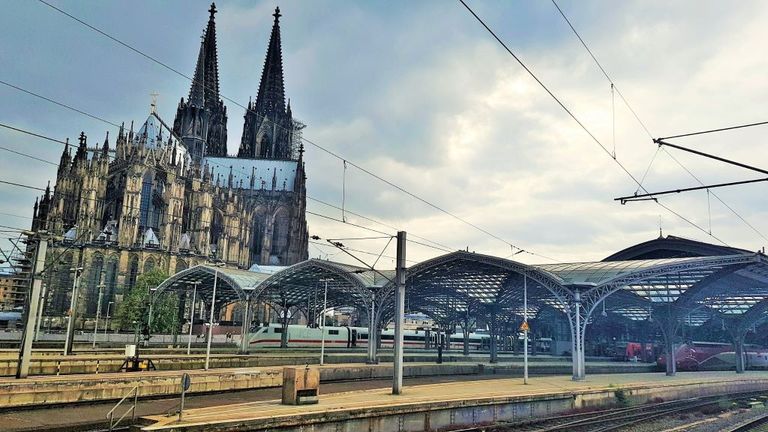
When travelling by train between north-west Europe and pretty much anywhere to the east and south of Frankfurt, Köln hbf is where connections can be made.
Because the city it serves sits in the middle of a web of routes that trains can follow east to Berlin, west to Paris, north to Hamburg and south towards Austria, Munich and Switzerland.
The station is also somewhat inevitably a hub for regional trains, so it's a great base from which to spend time making multiple day trips by train.
Though when the high-speed line which links Köln / Cologne with Frankfurt was opened, the trains which use it to travel between Frankfurt (Main) and destinations to the north of the city, have to reverse direction in Köln Hbf,
Hence the ICE trains on multiple routes only call at Köln Messe-Deutz station.
2 or 3 x trains per hour
to Aachen and Koblenz
1 or 3 x trains per hour
to Frankfurt (Main); 1 or 2 x trains per hour from Köln hbf; 1 x train per hour from Köln Messe-Deutz
1 or 2 x trains per hour
to Berlin, Bremen, Hannover, Hamburg, München / Munich**, Nürnberg / Nuremburg**, Stuttgart* and Ulm*
*= in alternate hours the departures are from Köln Messe-Deutz
**= some departures are from Köln Messe-Deutz
1 x train per hour
to Brussels (most hours) and Trier
1 x train every other hour
to Amsterdam, Baden-Baden, Basel, Freiburg(Breisgau), Karlsruhe, and Utrecht
Less frequent trains
to Heidelberg, Linz, , Paris and Wien/Vienna
2 x trains per day
to Bern, Brig, Luxembourg, Thun, Visp and Zurich
1 x train per day
to Bad Gastien, Chur, Dresden, Graz*, Innsbruck*, Klagenfurt*, Leipzig, Lindau*, Obertsdorf, Salzburg*, St. Anton*, Villach* and Westerland (Sylt)
*= departs from Köln Messe-Deutz
Night trains (departing before midnight)
- to Basel, Innsbruck, Linz, München / Munich, Wien /Vienna and Zurich by sleeper trains
- to Berlin and München / Munich by ICE trains
For full details see the journey guides.
From München / Munich
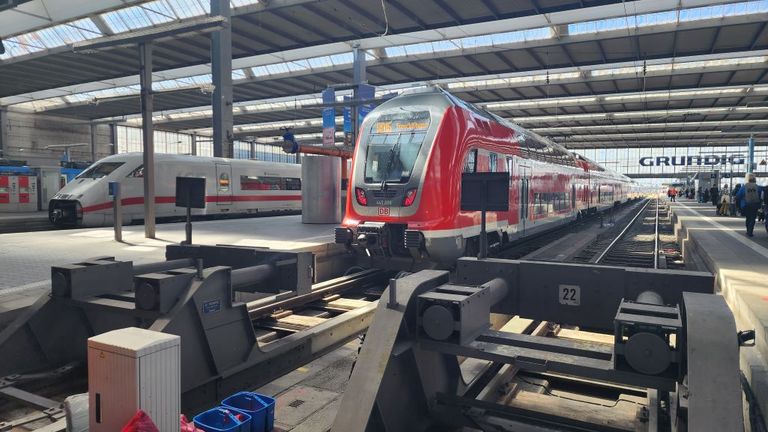
Due to a location less than two hours from the Austrian border, München Hbf is a gateway for rail travel between Germany and Austria.
However, many of those trains travel through Austria on to Croatia, Hungary, Italy, Slovenia* and Switzerland, hence München Hbf is the gateway hub when travelling between Germany and countries to the south.
2 to 4 x trains per hour
to Nürnberg / Nuremburg, Salzburg, Stuttgart and Ulm
2 x trains per hour
to Berlin and Erfurt
1 or 2 x trains per hour
to Frankfurt Airport, Köln-Messe/Deutz and Dusseldorf
1 x train per hour
to Frankfurt (Main)*, Garmisch-Partenkichen
* = fastest route
1 x train every other hour
to Bad Gastein, Bolzano, Bregenz, Budapest, Fussen, Innsbruck*, Klagenfurt, Köln hbf (the city center station in Cologne), Leipzig*, Lindau, Linz, Plzen, Praha / Prague, St Gallen, Trento, Verona, Villach, Wien / Vienna and Zurich
* = fastest route
Less frequent trains
to Bologna, Bremen, Graz, Heidelberg, Kaiserslautern, Karlsruhe, Klagenfurt, Padua/Padova and Venezia / Venice, Vicenza,
1 x train per day
to Amsterdam, Ancona (summer only), Basel, Freiburg (Breisgau), Lesce-Bled, Ljubljana, Paris, Rimini (summer only), Strasbourg, Utrecht and Zagreb
Night trains departing before midnight
- by ICE trains to Berlin and Hamburg
- by sleeper trains to Amsterdam, Budapest*, Firenze / Florence, Hamburg, Hannover, Krakow, Ljubljana*, Roma, Udine*, Venezia / Venice*, Warsaw, and Zagreb*
* = from Munchen Ost station
For full details see the journey guides
From Stuttgart
.jpg?width=768&resize=contain&quality=80)
One of the justifications for the ongoing €multi-billion transformation of Stuttgart Hbf is that because it's a terminus station, most of the international trains which use it don't travel through the city.
However, because they begin or conclude their journeys here, the station is already a hub where connections can be made.
2 to 4 x trains per hour
to München / Munich and Ulm
1 or 2 x trains per hour
to Frankfurt (Main) and Heidelberg
1 x train per hour
to Hamburg (most hours) Köln (the service is evenly split between trains to Köln Hbf and Köln Messe/Deutz), Nürnberg / Nuremburg and Singen
1 x train every other hour
to Berlin, Hannover, Leipzig and Zurich
Less frequent trains
to Bad Gastein, Graz, Klagenfurt, Koblenz, Paris, Salzburg, Strasbourg, Villach (connect for Ljubljana)
1 x train per day
to Amsterdam, Basel, Freiburg (Breisgau) Obertsdorf and Utrecht
Night trains
to Budapest, Ljubljana, Udine, Venezia / Venice, Wien and Zagreb
All images taken by Simon Harper
About the Author
Simon Harper has been writing about international rail journeys for over 10 years.